Most owner-operators treat fuel as weather: it costs what it costs, you buy it where you stop. Run the numbers for one quarter and the picture changes. Fuel is the second largest controllable line on a one-truck P&L, and four decisions account for almost all of the spread between a truck at $0.58 a mile and one at $0.71.
None of the four require new equipment. All four are decisions made before the truck rolls, which is exactly why they get skipped on a Sunday night.
Decision one: pick a fuel network before you pick a route
Discount networks price by location, not by brand loyalty. The same chain can be nineteen cents better in one state and four cents worse two hundred miles later. An operator who fuels wherever the low-fuel light says is paying a rolling premium that never shows up as a single bad decision.
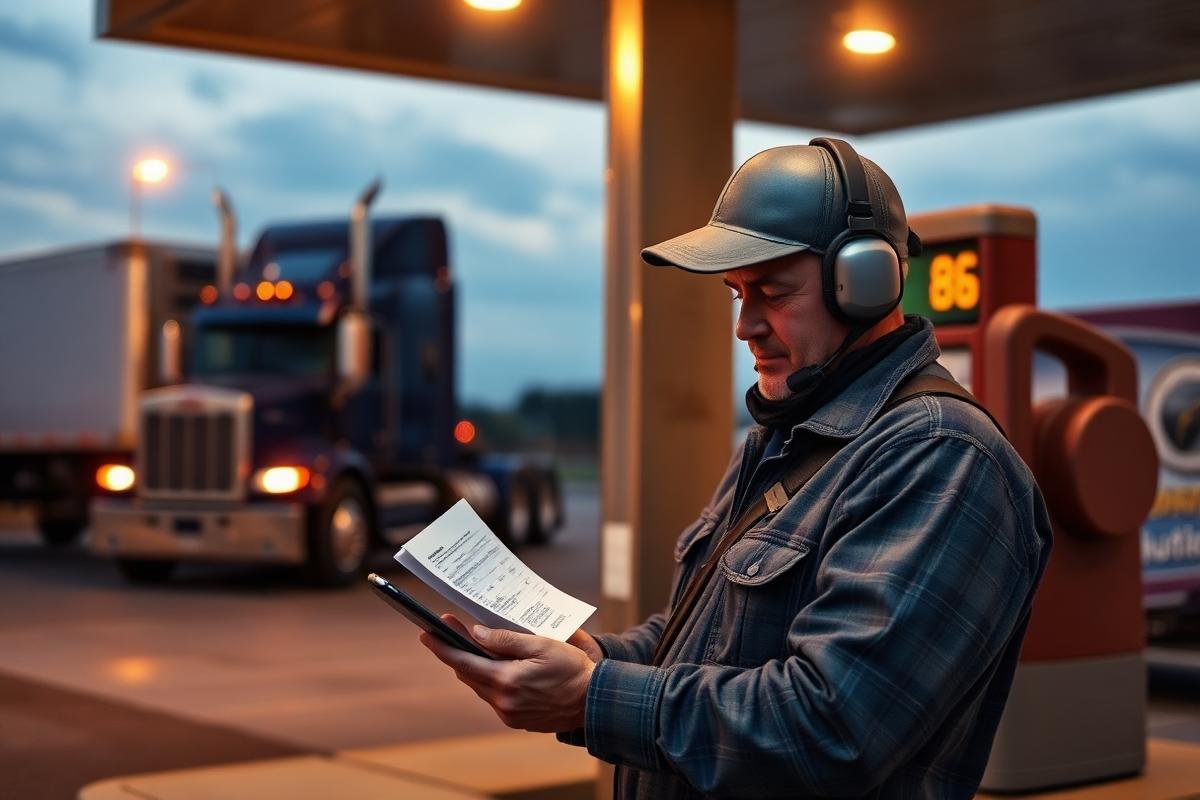
Plan two primary stops per lane before dispatch confirms the load, and treat everything else as an emergency top-off of fifty gallons or less.
| Decision | Typical swing | Weekly effect at 6.5 MPG |
|---|---|---|
| Network + stop planning | $0.14 / gal | $52 |
| State tax arbitrage on IFTA | $0.09 / gal | $33 |
| Idle discipline | 0.3 MPG | $41 |
| Speed held at 62 vs 68 mph | 0.6 MPG | $78 |
Decision two: buy where the tax is, not where the pump price is
IFTA settles the fuel tax across the states you actually drove, so a low pump price in a high-tax state is often a mirage — you paid the tax at the pump and get credited later. The number that matters is base price net of state tax, and it is the number most operators never look at.
- Compare net-of-tax price, not the sign price, when two stops are within sixty miles of each other.
- Buy heavy in states where net price is low and you have miles to burn.
- Never run a tank below a quarter to chase nine cents; a reroute of forty miles erases the win.
- Keep every receipt scanned the same day — an unmatched gallon is a taxed gallon at audit.
Decision three: idle is a fuel line disguised as comfort
A modern tractor burns roughly 0.8 gallons per hour at idle. Ten hours a night, five nights a week, is forty gallons — a full-day’s worth of driving fuel spent parked.
The fix is unglamorous: an APU or battery-based HVAC pays back inside eighteen months on a truck that sits in the sleeper five nights a week, and pays back never on a truck that goes home nightly. Run your own hours before buying anyone’s payback chart.
Decision four: the speed you hold is the rate you keep
Above roughly 60 mph, aerodynamic drag climbs faster than the clock saves you. Six miles an hour of speed buys about thirty minutes on a 350-mile leg and costs enough fuel to erase it on the settlement.
The exception is real: if the extra half hour makes a delivery window that protects the next load, take it. Speed as a habit is expensive; speed as a tool is fine.
- $0.58Fuel cost per mile on a planned week
- 0.8 galBurned per idling hour on a modern tractor
- 18 moTypical APU payback for a sleeper-heavy schedule
Questions operators ask
Is a fuel card worth it for a single truck?
Should my dispatcher plan fuel stops?

armdcat@gmail.com
All articles by this author